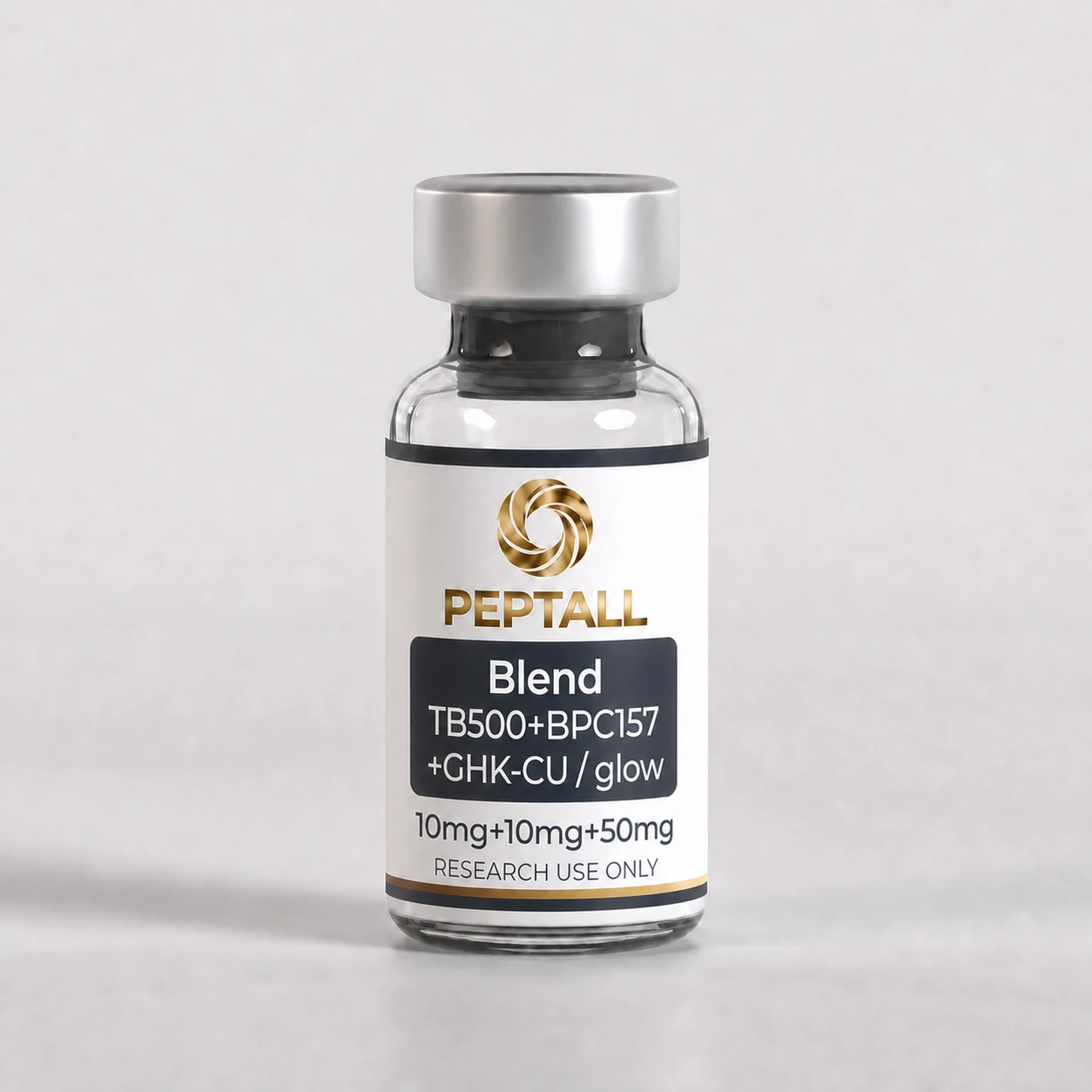
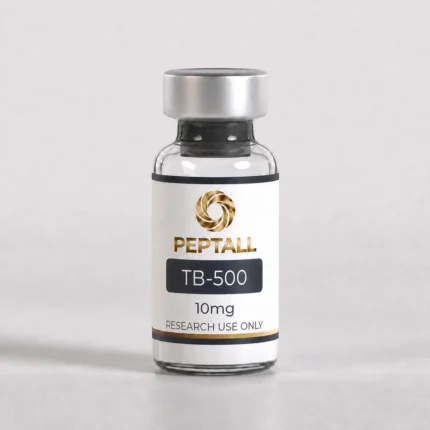
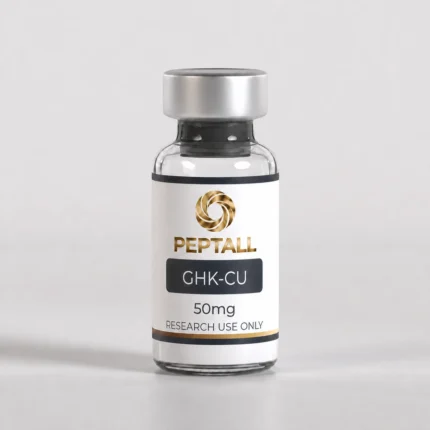
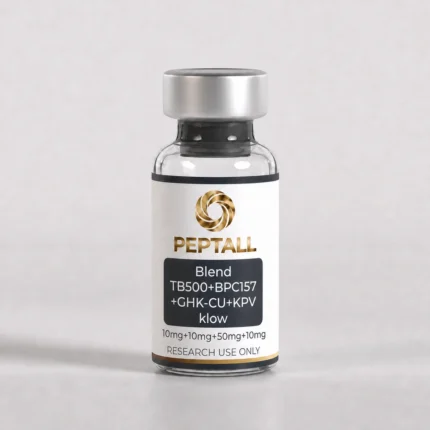
Research context. This research blend combines TB-500, BPC-157, and GHK-Cu for multi-peptide studies of matrix-associated and cellular-response pathways. Findings from experimental models do not establish clinical safety or efficacy.
Blend(TB500+BPC157+GHK-CU)/glow — Technical Research Profile
| Research classification |
Three-component peptide and copper-peptide research blend |
| Available size(s) |
10MG+10MG+50MG |
| Primary research system |
Cytoskeletal, migration, extracellular-matrix and copper-dependent response models |
Molecular and structural context
This blend contains TB-500-designated thymosin beta-4-related material, BPC-157, and the copper complex GHK-Cu. It is a fixed-ratio mixture, not a new covalent peptide, and each component retains distinct physicochemical behavior.
Mechanistic research framework
The formulation enables combined-exposure research across actin-associated migration, focal-adhesion and stress pathways, and copper-dependent matrix signalling. Metal exchange and component interactions may change effective concentrations in complex media.
Controlled models can compare combined effects on cellular migration, cytoskeletal organization, copper-dependent signalling, and extracellular-matrix processes.
Experimental applications and endpoint selection
A factorial design should include each component alone, selected two-component combinations, the complete blend, vehicle, copper-only, and peptide-only controls. Endpoints can include migration, matrix-protein expression, redox markers, cytoskeletal imaging, and viability.
This material is intended for analytical, biochemical, receptor-pharmacology, cellular, or other controlled preclinical workflows as appropriate to the target system. Study design should define the biological matrix, exposure duration, concentration range, replicate structure, acceptance criteria, and statistical plan before data collection.
Principal areas of scientific inquiry
- Multi-peptide cellular-response models
- Migration and cytoskeletal research
- Copper-dependent matrix signalling
Technical keywords
- Three-component blend
- Factorial controls
- Copper-peptide speciation
- Matrix and migration models
Analytical characterization considerations
Component-resolved quantification is required: total peptide purity cannot confirm the ratio or copper occupancy. Suitable methods may combine LC-MS, chromatography, elemental analysis, and spectroscopic evaluation of GHK-Cu speciation.
Where scientifically appropriate, laboratories may use orthogonal methods such as reversed-phase HPLC for chromatographic purity, LC-MS for molecular identity, size-sensitive methods for aggregation, and a target-relevant functional assay for biological activity. Method suitability, reference standards, system suitability, and acceptance limits must be independently established; these examples are not batch-specific analytical claims.
Study design and interpretation
Use vehicle, positive, negative, and concentration-matched controls appropriate to the assay. Receptor expression, biological matrix, incubation time, adsorption, proteolysis, passage number, and species background can all change apparent potency or pathway output. Observations from in vitro or animal models should not be extrapolated to human use.
Handling and documentation
Use calibrated equipment and documented receipt, storage, preparation, aliquoting, freeze-thaw, and disposal procedures. Solvent compatibility, working concentration, stability window, container adsorption, and assay recovery must be established by the purchasing laboratory using the applicable batch documentation and institutional standard operating procedures.
Important compliance and safety remarks
- No therapeutic, diagnostic, cosmetic, or veterinary claims are made.
- Work must be performed by qualified personnel under applicable institutional and regulatory requirements.
- Use appropriate personal protective equipment and controlled laboratory procedures.
For research use only. Not for human or animal consumption.
Research-use notice. This material is supplied solely for legitimate research and analytical purposes. Researchers are responsible for material suitability, laboratory safety, and compliance with all applicable requirements.